Showing posts with label imagination. Show all posts

Wednesday, July 13, 2011

John Steinbeck


"Ideas are like rabbits.  You get a couple and learn how to handle them, and pretty soon you have a dozen."


American Novelist


1902 - 1968


Do you ever have too many ideas?  Sometimes when I am writing I am swamped with ideas and sometimes I don't know which ones to choose.  Writing fiction is full of opportunity.  Do you make the main character tall, short or medium height?  Does he have blonde, black or curly hair?  Does he have physical, social or mental disability?  Hundreds of questions.  Thousands of answers.  Sometimes having too many ideas can become a barrier to creating.  Writing fiction requires making choices — choosing a path to follow and not looking back.  The characters take on a life of their own.  


What is the best path to follow?  What are the best choices to make?  Sometimes I have ten ideas, but only two or three are worth keeping.  Don't be afraid of choosing — of following a path to where it takes you.  And keep the ideas coming.  Even bad ideas can lead you somewhere new and inviting.  The good ideas won't appear if there are no bad ideas on which to stand.  Light a candle and watch the ideas grow by leaps and bounds.

Sunday, June 26, 2011

Edvard Munch


The Scream
(1893)


"I was walking along a path with two friends, the sun was setting.  I felt a breath of melancholy.  Suddenly the sky turned blood-red.  I stopped and leant against the railing, deathly tired, looking out across flaming clouds that hung like blood and a sword over the deep blue fjord and town.  My friends walked on.  I stood there trembling with anxiety and felt a great, infinite scream pass through nature."


Norwegian Painter


1863 - 1944


Edvard Munch
1921


Edvard Munch was inspired to paint The Scream by what he felt.  He later said: "For several years I was almost mad. . . You know my picture, The Scream? I was stretched to the limit — nature was screaming in my blood. . . After that I gave up hope ever of being able to love again."


What drives you to paint?  What inspires you to write?  Is it light or darkness?  Fear or compassion?  Beauty or pain?  What message do you want to communicate?  What is your vision of the world?  Does your creative work come from deep within your soul?  Do you paint what you feel?  Do you write what you experience?


Wednesday, June 15, 2011

Dorothy Dunnett


"Facts are the soil from which the story grows.  Imagination is a last resort."


Scottish Novelist, Portrait Painter


1923 - 2001


A story should be rooted in reality.  The reader needs to be able to relate the characters to the world that he knows.  Consider the novel, Watership Down, by Richard Adams.  The story is about rabbits and yet, we identify with them because of their human characteristics.  Dorothy Dunnett was a writer of historical novels who did immense research to place her stories in historical reality.  But facts are never enough.  It is in the imagination that the story takes wings and flies far from the facts to spin a story that touches the minds and hearts of the readers.


Have you rooted your stories in the reality?  Have you used your imagination to carry the stories to the heavens?  How about your paintings?  Is there something in the work with which we can identify?  Does the painting carry us beyond the facts into another world?

Saturday, June 11, 2011

Harry Emerson Fosdick


"Picture yourself vividly as winning and that alone will contribute immeasurably to success. Great living starts with a picture, held in your imagination, of what you would like to do or be."


Harry Emerson Fosdick

American Author, Clergy

1878 - 1969


Do you see yourself as a successful writer, successful artist or successful actor?  Success begins in the mind.  If you want to be successful, you need to see yourself as a success.  You need to believe in yourself and your talent.  Another word for it is visualization.  You need to visualize your success.  The mind is very powerful.  You must first see yourself as successful.


Do you ever worry?  Maybe you worry about having enough money to pay the bills.  Or maybe you worry about those you love.  Most people worry at one time or another.  Worry is a negative form of visualization.  Worry is visualization of your deepest fears.


Harness the visual power within your mind to create your success as an artist, a writer and a creative leader.  See yourself writing a novel, painting a picture, or writing a screenplay.


Monday, May 30, 2011

Albert Einstein


"I am enough of an artist to draw freely upon my imagination.  Imagination is more important than knowledge.  Knowledge is limited.  Imagination encircles the world."


German Theoretical Physicist


1879 - 1955


Unfortunately, most schools are focused on increasing the knowledge of their students, not their imagination.  And while knowledge is important, imagination is even more important.  There is a limit to how much knowledge we can gain and retain.  The span and accuracy of knowledge is constantly changing and expanding.  What is considered truth today is considered foolish tomorrow.  Once people believed the earth was flat.  We would be much better off if our schools also encouraged imagination.


And the same can be said about creative leaders.  Many artists, writers, actors and musicians study to increase their knowledge of their art.  And this knowledge is good but limited.  We need to be encouraging our imaginations.  We should be exploring the worlds of our imaginations.  What are you doing to increase your imagination?

Saturday, May 21, 2011

Jean-Baptist-Camille Corot


Interrupted Reading


"Don't imitate, don't follow the others, or else you will lag behind them."


French Painter


1796 - 1875


As a creative leader, you want to standout.  You need to develop your own unique style.  This can not happen if you are imitating others.  Follow your vision, not the vision of others.  Be innovative and different.  Set the standard for others to follow.  


When you follow your own vision, there will be detractors who tell you it can't be done.  Ignore the naysayers — those who say you are a fool.   Don't listen to their negativity.  Hold true to your heart and to what you believe to be the path for you.


The Bridge at Nantes


Tuesday, May 10, 2011

St. Francis of Assisi


"He who works with his hands is a laborer.  He who works with his hands and his head is a craftsman.  He who works with his hands and his head and his heart is an artist."


— St. Francis of Assisi


Italian Friar and Preacher


Founder of the Franciscan Order


1181 - 1226


What makes a great painting, poem or novel is the heart of the artist.  Great art grows out of the heart, not the mind.  A person can perfect his technique and think new ideas, but if the work he produces does not have heart, it ultimately will fail.  Yet a work of art that has heart will be able to overcome poor technique and weak ideas.


Emotion is what connects one human being to another.  Emotion is what connects a work of art with the audience.  Emotion is what artists must put into their work.  Have you connected with your heart?  Do you create from the heart?  Do you feel as your heart feels?  Or are you lost somewhere in your mind, thinking up new thoughts and new ideas?  Ideas are not enough. We must feel the emotion behind what we create.

Sunday, May 8, 2011

Henning Mankell


"To grow up is to wonder about things; to be grown up is to slowly forget the things you wondered about as a child."


Swedish Novelist


1948 - 


I watch the three-year-old child that my wife and I are raising and I am amazed at the creative powers of her mind to imagine worlds that I cannot see.  To invent stories and stories within stories.  What happens to us as we grow up and take on the cloaks of the adult world?  Where does our inventiveness go?  What worlds of the imagination have we forgotten?


What do you do to keep your mind young?  Do you play with children?  Do you enter their worlds?  Or does the path you walk become narrower with each passing day?  Do you still think as a child or have you given up childish things?  Are you young at heart?  Or are the arteries of your imagination clogged?


I recently finished Mankell's excellent novel, The Man From Beijing.  Here is a video of Henning Mankell discussing the novel at Strand Bookstore.


Saturday, April 2, 2011

Flannery O'Connor


"Anybody who has survived his childhood has enough information about life to last him the rest of his days."


American Novelist


1925 - 1964


Do you remember your childhood?  Some people block out memories of their childhood?  Others have a difficult time forgetting even the most painful memories.  As artists and writers we can mine our past experiences for inspiration for our art.  What events out of your childhood can you use in your stories or your art?  Remember art should transform the actual events into more than just the mere facts like spinning straw into gold.


Here are links to three story poems where I transformed childhood stories and events into more than family history — where I discovered a truth greater than facts.


Mary Lou

http://web.mac.com/hgking/HarleyKing/Mary_Lou.html


Sister

http://web.mac.com/hgking/HarleyKing/Sister.html


Brother Al

http://web.mac.com/hgking/HarleyKing/Brother_Al.html

Thursday, March 31, 2011

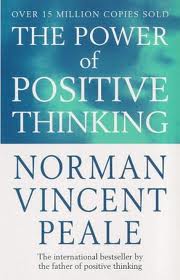
Norman Vincent Peale


"Imagination is the true magic carpet."


Author, Minister


1898 - 1993


Our minds are very powerful.  What we imagine, think and say can impact what we do.  Creative leaders should use their imagination not only for their creative work, but also for their personal lives.  Can you see yourself as a successful writer, artist or actor?  Can you see yourself sitting at a desk typing that great novel or standing at a easel painting your best painting?


Do you want to change some habit or relationship?  Begin by imagining yourself in a new role or relationship.  See yourself successfully behaving in a new way.  We call this positive visualization.  Most of us already do negative visualization.  Do you ever worry about the future?  Worry is a negative form of visualization.


Through the process of visualization we can change who we are.  This is the power of positive thinking.  The easiest thing in the world is to be negative.  It takes a lot more will power to be positive in a negative world.  I challenge you to take five minutes each day and visualize your success.


Saturday, March 19, 2011

Robert M. Persig


"To live only for some future goal is shallow.  It's the sides of the mountain that sustain life, not the top."


American Writer


1928 - 


Those of us who set goals sometimes get so caught up in the goal that we live only in tomorrow's world and forget about today.  We think that when we publish our first book or sell our first painting that everything will be perfect.  The future that we imagine is never what we thought it would be.  We still carry the negative baggage that we have today into the future.  If we have marital problems today, we probably will still have them tomorrow.  We need to learn to live with ourselves no matter what our living conditions are.  Whether we are poor or rich, we are still the same person.  If we are unhappy when we are poor, we will be unhappy when we are rich.  Learn to be happy now.  Enjoy the moment.


Have you stopped to smell the roses today?  Spring is just around the corner and the hard winter of 2011 is sliding out the door.  Are you finding joy in the moment?  Have you seen the first robins or the red-wing blackbirds?  Have you given those you love a hug and told them that you love them?  Take a walk today.  Taste the wind on your lips.  Smell the fresh air.  Dance with the rain drops.


Goals are important but they should not dominate our lives to the point that we ignore the beauty around us.  Don't live in the future because it has not come yet.  Don't live in the past because it has already gone.  Live in the moment where you are.  Love yourself for who you are now.

Tuesday, March 8, 2011

Hugh Nissenson


"One of the things that I felt I wanted to do as an artist was to expand the frontiers of my imagination as much as I could; to follow wherever my imaginative facility took me, and to create alternate worlds."


American Novelist, Poet and Artist


1933 - 


One of the things that fascinates me about writing is the opportunity to create a world peopled with characters.  I enjoy watching the world take form out of my imagination combined with memory.  Now, it can be a world that looks very much like the world you and I live in or it can be a world that is solely from my imagination.  As a reader, I am deeply impressed with science fiction writers and their ability to create alternate worlds.  If you have not read Dune by Frank Herbert, you need to put it on your to-read list.


I am also fascinated by artists who paint genre paintings.  They create a whole world within a painting.  Two of my favorites are the American, Eastman Johnson, and the Dutch Master, Jan Steen.  Both artists tell stories through their paintings.  They create worlds that we can see.


What stories are you telling through your art?  What imaginative worlds are you creating?  Are you expanding the frontiers of your imagination?  Are you seeing things that others can't see?  Are you opening up new worlds for others to experience?


In my research on Hugh Nissenson, I discovered an amazing artist.  As part of the process of writing a novel about an artist, Nissenson painted a series of paintings for the novel in the style of his character.  In this video, Nissenson discusses his combining art and poetry into the novel. The Song of the Earth.


Friday, March 4, 2011

Stanley Kunitz


"The poem in the head is always perfect.  Resistance begins when you try to convert it into language."


American Poet


1905 - 2006


This statement by Stanley Kunitz sums up one of the key challenges that every creative leader faces.  What we create in the physical world never is as good as what we imagine in our minds.  Most artists, writers and performers are never satisfied with the end product because we see something different in our mind's eye.  And we have to learn to accept that it is okay to be imperfect.  Perfection is unachievable.  In fact, as humans what makes us interesting is our flaws.  And the same thing is true of our art.  It is the mistakes that make our art unique.  If the work we created was perfect, then every piece of art would look the same.  It is our flaws and weaknesses that make our art uniquely ours.  Our imperfections help make the art perfect.


Here is a poem by Stanley Kunitz.


Passing Through


By Stanley Kunitz


     -- on my seventy-ninth birthday


Nobody in the widow's household

ever celebrated anniversaries.

In the secrecy of my room

I would not admit I cared

that my friends were given parties.

Before I left town for school

my birthday went up in smoke

in a fire at City Hall that gutted

the Department of Vital Statistics.

If it weren't for a census report

of a five-year-old White Male

sharing my mother's address

at the Green Street tenement in Worcester

I'd have no documentary proof

that I exist.  You are the first,

my dear, to bully me

into these festive occasions.


Sometimes, you say, I wear

an abstracted look that drives you

up the wall, as though it signified

distress or disaffection.

Don't take it so to heart.

Maybe I enjoy not-being as much

as being who I am.  Maybe

it's time for me to practice

growing old.  The way I look

at it, I'm passing through a phase:

gradually I'm changing to a word.

Whatever you choose to claim

of me is always yours;

nothing is truly mine

except my name.  I only

borrowed this dust.


Saturday, February 26, 2011

Gloria Steinem


"Without leaps of imagination or dreaming, we lose the excitement of possibilities.  Dreaming, after all, is a form of planning."


American Journalist, Author


1934 - 


Most of us underestimate the power and importance of dreaming — whether we are talking about day dreaming or sleep dreaming.  Sleep dreaming is one of my favorite times, especially in the twilight world between being awake or being asleep.  Dreams can feel so real and meaningful.  Years ago I kept a dream journal where I would record my dreams.  I have documented proof that I dreamed of marrying my wife a month before I met her.  So I do believe that dreams can predict the future.  I have experienced the excitement of possibilities.  Dreams are small windows into our souls.  


Day dreaming is a way to explore your options and find the right path.  Day dreaming helps creative leaders make decisions and take action.  As Steinem says, day dreaming is a form of planning, a way of preparing for what is to come.  Our minds are very powerful and we can see things our mind's eye before they happen.


Have you ever gone to sleep thinking of some problem and wake up with the answer?  You need to learn to harness the power of your dreams to help you creatively solve problems.  You need to increase your involvement with dreams.  My wife at a very young age discovered that she had the ability to consciously change her dreams.  If she did not like where her dreams were going she would change them while dreaming.  Today we call it lucid dreaming. 


Tuesday, February 22, 2011

Jean-Auguste-Dominique Ingres


Self-Portrait

(1804)


"A painter can turn pennies into gold, for all subjects are capable of being transformed into poems."


French Artist


1780 - 1867


The Valpincon Bather

(1806)


Some people believe that art is only about painting beauty.  Other people believe that writers should not write about certain subjects.   And still others seek to censor artists and writers.  Think about books that have been banned in school districts or art that is considered pornographic.  The American Library Association publishes online a list of 100 novels that have been banned from time to time.


What subjects do you avoid painting or writing about?  In what ways do you censor your own creative tendencies.  Do you paint to please others?  Do you avoid writing about certain events because it could hurt others?  How do you choose the subjects that you paint or write about?  Or does the subject choose you?  Do write about what interests you or do you write what you think the world wants to read?  Consider how many writers now write about vampires since the success of Ann Rice.  Or how many writers follow in the footsteps of the Harry Potter books.


Do you think Ingres is correct?  Can a painter can turn pennies into gold?  Can a writer make any subject poetic?  


Louise de Broglie

(1845)


Monday, February 14, 2011

Alan Alda


"Be brave enough to live creatively.  The creative is the place where no one else has ever been.  You have to leave the city of your comfort and go into the wilderness of your intuition.  You cannot get there by bus, only by hard work, risking and by not quite knowing what you are doing.  What you will discover will be wonderful: yourself."


— Alan Alda


American Actor, Director, Screenwriter


1936 - 


Have you visited the wilderness of your intuition?  Have you listened to the voice within your spirit?  Have you descended into the depths of your soul?  Have you discovered the nature of your existence?  Creativity is a journey of the spirit to realms not seen by the ordinary eye.  If you have been blessed with the opportunity to travel this road, then you understand the healing power within your soul.  God walks with each of us.  We must learn to decipher his voice from the chaotic noise so we may enjoy the majesty of beauty.


Monday, February 7, 2011

Sara Teasdale


"It is my heart that makes my songs . . . ."


American Poet


1884 - 1933


Our most original creative work comes from the heart.  The heart produces work that is more authentic than work produced by the analytical brain.  Analytical stories and poems fail to connect with the hearts of the readers and leave them wanting more.  Creative work that does not come from the heart can be cold and uncaring.  You will do your best work if it comes from the heart.  


Debt


by Sara Teasdale


What do I owe to you


     Who loved me deep and long?


You never gave my spirit wings


     Nor gave my heart a song.


But, oh, to him I loved,


     Who loved me not at all,


I owe the little open gate


     That led through heaven's wall.


(Originally published in Poetry, March 1914.)

Friday, February 4, 2011

Bebe Moore Campbell


"As I grow older part of my emotional survival plan must be to actively seek inspiration instead of passively waiting for it to find me."


American Novelist


1950 - 2006


Where do you find inspiration?  Do you wait for inspiration to hit you like a lightening bolt or are you actively looking for events, people, places and objects to inspire you?  I believe we need to constantly be stoking the fires of creativity.  And we can do this by exploring places we have never been, immersing ourselves in new cultures and meeting new and unusual people.  We can also stoke the fires by reading books on history, biographies and memoirs.  If we wait for inspiration to strike, we may be along time in waiting.  What do you do to stoke the fires of creativity in your life?


Elizabeth Bebe Moore was born and raised in Philadelphia, Pennsylvania.  She graduated from the University of Pittsburgh with a degree in elementary education and taught school in Atlanta, GA.  Her first book was a work of nonfiction, Successful Women, Angry Men: Backlash in the Two-Career Marriage.  She was the author of three New York Times bestsellers:  Brothers and Sisters, Singing in the Comeback Choir and What You Owe Me, as well as two picture books for children.  Elizabeth Bebe Moore Campbell died on November 27, 2006 from brain cancer.

Tuesday, February 1, 2011

Eugene Delacroix


Self-Portrait (1837)


"What moves men of genius, or rather what inspires their work, is not new ideas but their obsession with the idea that what has already been said is still not enough."


French Artist


1798 - 1863


Orphan Girl at the Cemetery

(1923)


Why do you write?  Why do you paint?  What inspires your creative work?  Do you have something new to say to the world?  Are you obsessed with telling the world what you know?  We each create for different reasons — some we are conscious of and others that are hidden even from us.  


I personally believe that there is little in the universe of humanity that has not been thought, said or written by someone somewhere, but fortunately, we have forgotten much of what has been learned by previous generations and each generation has to learn anew.  It is in the relearning of the forgotten that we have the inspiration to create what has not been created — to reshape the myths of the world.


I challenge each creative leader to study history — to understand what happened before you were born.  It is in the knowing of the past that you can begin to reshape the future — to create anew that which is ancient, to find the thread that ties us together.


Liberty Leading the People

(1830) The Louvre