Showing posts with label Hope. Show all posts

Sunday, July 10, 2011

Facundo Cabral


"When life shows you a thousand reasons to cry, show it you have a thousand and one reasons to smile."


Argentine Folk-Singer, Writer


1937 - 2011


Nobody's life is perfect and without problems.  We all face challenges.  Being rich and famous does not protect anyone from facing life's challenges.  Being poor and hungry does not ensure anyone happiness.  Being a writer, a singer or a painter does not save you from suffering and pain.  We all have reasons to cry, but we have even more reasons to sing and smile.  Have you watched the sun rise?  Have you heard the singing of the birds?  Have you listened to the rain?  Celebrate life!


Facundo Cabral was a 74-year-old Argentine folk-singer who was shot and killed in Guatemala on Saturday, July 9th.  Take a moment and listen to this spoken word poem with English sub-titles.  Celebrate the life and words of an artist.


Thursday, June 30, 2011

William Sloan Coffin


"All of life is the exercise of risk."


American Author, Clergy, Peace Activist


1924 - 2006


Have you ever let fear stand in the way your doing something that you desired to do?  Most of us have.  And yet if we stop and think about it: all life is a risk.  While eating carrots, you can choke and die.  Walking down the street at 6 a.m., you can be hit by a speeding car.  Taking a shower, you can slip and fall and hit your head.  You can visit a doctor and be told that you have cancer and have only six weeks to live.  All life is fraught with risk.  So why haven't you tried that new technique of painting?  Are you afraid you will fail?  Why haven't you sent your novel to a publisher?  Are you afraid of rejection?


Fear is powerful and often stops us from doing what we want to do?  We all have dreams and hopes, but sometimes we are not courageous enough to take that first step into the unknown.  That first step is often the most difficult.  In our minds, we think of all the things that could go wrong.  We should instead focus on our dreams and what we want to accomplish.  What steps are you going to take today to overcome your fears?  

Wednesday, June 29, 2011

Odani Motohiko


"I used to find that idea of an ever changing, impalpable style appealing, but now I want to concentrate on the things I ought to be doing, the things that only I can do.  The result I hope will be works that like the Buddhist statues of the past will be capable of communicating with people for centuries to come."


Japanese Artist


1972 -


Are you doing the creative work that you ought to be doing — that only you can do?  In today's world it is easy to get sidetracked and caught up in projects that have nothing to do with our true work.  There are many people and things that demand our attention and time.  If you don't know what creative work you are supposed to be doing it is easy to get lost.  Do you have a vision of the work that you should be doing?  Do you stay focused or are you easily distracted?


Will the creative work that you are doing still be communicating to generations to come?  Or will your work be forgotten as soon as you leave this world?  No one can predict which poems, or paintings or sculptures will last for centuries and which are meant for the dustbins of time.  Many artists and writers dream and hope that their creative works will give them immortality.    


To see more of Odani Motohiko's creative work, check out this site:


Friday, May 27, 2011

Terry McMillan


"Writing is my shelter.  I don't hide behind the words; I use them to dig inside my heart to find the truth."


American Novelist


1951 -


What is your art for you?  Is it your shelter?  Your protection?  Your connection to the outside world? Whether we are writers, painters or poets, our art serves us in many ways.  Sometimes it provides us hope for a better world.  Sometimes it provides us with the strength to go on living.  Often it saves us from our own worst selves.  Some of us are better people because of our art.


Do you tell the truth with your art?  Do you share what needs to be shared.  Or do you hide behind your art?  Do you dig deep inside your soul and reveal the truth?  Or do you share only what floats on the surface of the water?

Friday, March 25, 2011

Michael Chabon


"A book itself threatens to kill its author repeatedly during it composition."


American Novelist


1963 - 


Do you an unfinished novel laying on a shelf in your office?  Do you have unfinished paintings hidden in a closet somewhere?  I spent 4 years working on a novel before I quit to write a book on pet loss with my wife.  Many published and unpublished writers have books they have never finished.  And the same is true with painters.  In fact, painters often paint over old paintings.


In an essay, Burn Before Reading, recently published in the New York Times Book Review (March 6, 2011), Dan Kois identifies a few novelists with unfinished novels. 


  • Saul Bellow

  • Truman Capote

  • Michael Chabon

  • Junot Diaz

  • Jennifer Egan

  • Nikolai Gogol

  • Chang-rae Lee

  • Harper Lee

  • Richard Price

  • John Updike

  • Evelyn Waugh


So take heart, my friend!  You are not the only one who did not finish a novel, a painting, a song or a poem.  The difference between those who are successful and those who are not is the successful artists and writers keep creating new works even if the old ones are not finished.  So keep writing.  Keep painting.

Sunday, March 13, 2011

Rabindranath Tagore


"Faith is the bird that feels the light and sings when the dawn is still dark."


Bengali Poet, Novelist, Musician, Painter, Playwright


1861 - 1941


Do you believe in your artistic talent?  Do you have faith in your creativity?  Do you let your creative light shine or do you hide it under a bushel basket and refuse to share it with the world?  Creative leaders need to have the faith that they are on the right path.  Even in those darkest hours before the dawn, you need to understand the sun will rise again — that your creative work is important.  Don't give up on yourself.  Don't give up on the work you do.  You are unique and special.  No one else can create the paintings, the poems or the novels that you can create.  If you don't use your creative gift to produce art, the world will have lost much.  So pick up your pen and write.  Pick up your brush and paint.  Pick up your guitar and sing.


Here is a poem by Tagore:


My Song


by Rabindranath Tagore


This song of mine will wind its music around you,


my child, like the fond arms of love.


The song of mine will touch your forehead


like a kiss of blessing.


When you are alone it will sit by your side and


whisper in your ear, when you are in the crowd


it will fence you about with aloofness.


My song will be like a pair of wings to your dreams,


it will transport your heart to the verge of the unknown.


It will be like the faithful star overhead


when dark night is over your road.


My song will sit in the pupils of your eyes,


and will carry your sight into the heart of things.


And when my voice is silenced in death,


my song will speak in your living heart.


Friday, March 11, 2011

Rudyard Kipling


"If history were taught in the form of stories, it would never be forgotten."


English Novelist and Poet


1865 - 1936


Do you love history?  Do you read history?  Or could you care less about history?  Do you incorporate history into your writing and paintings?  I believe creative leaders need to study history?  Artists should study art history and many do.  Writers should study the lives of writers.  English degrees tend to focus on the literature and studying the literature.  Writing degrees tend to focus on the writing.  But few writers study the history of writing, the history of writers, the history of words or the history of publishing.  I have met many wanna-be poets who haven't even read other poets. They would never consider studying the history of poetry.


But understanding literature, art and theater requires more than studying the history of the arts.  We need to study literature, art and theater in the context of the times they were created.  We need to study the social, political and economic histories.  We need to read biographies and memoirs. 


Writers, artists and actors are people of their times.  They creative works contain the same beliefs, hopes and biases that can be found in the rest of their society.  Novels written in other times and places will teach you one perspective of that society.  Their paintings are minature history books.


So I encourage you to read a biography of a favorite writer, actor or artist.  Immerse yourself in the history of another time and place.  What was Paris like during the time of the Impressionists?  What was New York like during the 1950's and the beats?


One of my favorite movies is The Man Who Would Be King, starring Sean Connery and Michael Caine, directed by John Huston and based on the novel by Rudyard Kliping.  The movie takes us to another place and time and gives us a glimpse of a world not our own.  Here are some scenes from the movie.


Thursday, March 3, 2011

Marcel Proust


"The real voyage of discovery consists not in seeking new landscapes but in having new eyes."


French Novelist


1871 - 1922


For some people the environment is crucial to their happiness.  They let where they live affect their emotional life.  And there is some truth to the fact.  Cloudy days can bring people down.  Long winters give some people cabin fever.  Others need the mountains or the ocean or the prairie.  How does your environment affect you as an artist?  Does it inspire your creativity?  Does it make you hopeful?  Does it make you happy?


For other people like Proust and myself, the environment is less important?  I can create anywhere.  I can sit in a shopping mall and write poetry.  I can sit in a church and write.  As I write these words I am sitting in a hotel in South Carolina.  And the environment rarely affects my mood or happiness.  I love the mountains, the ocean and the prairie, but I don't need them to be happy.  I live inside my head.  Can you create anywhere?  Or must you be in a certain place?  A certain mood?  A special environment?


Wednesday, February 16, 2011

Nikos Kazantzakis


"I fear nothing, I hope for nothing, I am free."


Greek Novelist


1883 - 1957


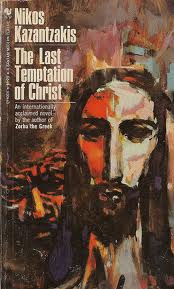
Years ago I read the fascinating novel, The Last Temptation of Christ, by Nikos Kazantzakis.   The novel is an attempt to put a human face on Jesus Christ and take him out of the spiritual world where he is God.  The book has since been made into a movie.  I don't recall if this quote is from the book, but it could be given the storyline.


What kind of person would make this kind of statement?  Who among us is not afraid of something?   Who hopes for nothing?  And does freedom really mean having no fear and no hope?  Should the creative leader fear nothing?  Should the artist hope for nothing?  Can a novelist ever be free?  And what is freedom, anyway?  Every society places constraints on its citizens.  Society by its very nature has rules and regulations to govern interaction between people.  Artists often attempt to step outside the boundaries laid down by society.  Some are successful and others are destroyed in the process.


Is Nikos saying that if we have hopes and fears that we are not free?  How can a creative leader function if he does not have hope?  Wouldn't he stop living?  While many of us wish that we did not have fears, there is a positive aspect of fear.  It can protect us from real danger.  Would you want to live without fear?

Wednesday, January 26, 2011

Katharine Graham


"To love what you do and feel that it matters — how could anything be more fun?"


American Publisher


1917 - 2001


Do you love to paint?  Do you love to write?  Do you love to act?  Do you love to draw?  What is your passion?  If you do not enjoy writing or singing or painting, then maybe it is time to get out of the creative business and find something you love to do.   The creative world is difficult and if you don't have fun being creative, you will feel like you have been hit by truck. 


What we as creative leaders do is very important.  We touch people's lives and help them feel better about themselves.  We solve problems and show the world a better way.  We bring beauty and ideas into the world.  We help people escape their mundane worlds for a short time.  We inspire people to be better than they are.  We give hope where there is none.  We help people visit new worlds and experience new places.

Thursday, January 20, 2011

Edwin Hubbell Chapin


"Never does the human soul appear so strong and noble as when it forgoes revenge and dares to forgive an injury."


American Author / Preacher


1814 - 1880


As creative leaders we often face rejection.  People ignore our paintings.  Editors reject our writing.  Critics criticize our work.  How we respond to this rejection is a indicator of our character.  When I was in sixth grade I was asked to be the reporter for our class news in the local newspaper.  The criticism I received was that I needed to tone my writing down because it was too much like advertising.  I was so deeply hurt that it was years before I picked up a pen and began to write again.  But those articles foreshadowed a later career in marketing and advertising where I did actually write ads.


How do you handle criticism?  How do you respond to rejection?  Many years ago I submitted two haiku to two different magazines accidentally.  The reason I found out is that they both were returned on the same day.  The first letter I opened was a rejection slip and it hurt.  When I opened the second envelope, I found the haiku was accepted for publication.  I learned a valuable lesson that day.  There will always be rejection, but there will also be acceptance.  Don't focus on the rejection; focus on the acceptance.  Editors are fickle and rejection often has nothing to do with you.  It has to do with the editor's editorial needs and his personal taste.

Sunday, January 16, 2011

Douglas Adams


"I may not have gone where I intended to go, but I think I have ended up where I needed to be."


1952 - 2001


English novelist


When we are young, we have lots of dreams of what we want to do with our lives.  When I was in junior high, I wanted to be an architect.  My father was a general contractor and build over 300 houses in his lifetime so I am sure that was an influence on my dream.  But in recent years, I realize that I had as a child a desire to draw which no one encouraged.  When I was a sophomore in high school I made a commitment to be a minister.  By the time I was a senior in high school I had lost my faith in religion.  In college I dreamed of being a writer.  My life may not have turned out as I imagined, but I believe it turned out better and I became what I was meant to be.


I have spent more than 35 years writing poetry and short stories.  I have published 14 books and hundreds of poems.  I have spent over 20 years as a motivational speaker (ministry) touching people's hearts and souls.  And late in my life I have turned to painting masks.  I know I ended up where I needed to be and did what I needed to do.


I believe that we are all here on this earth to learn lessons and grow.  Everything that happens to us will teach us valuable lessons.  The choices we make will lead us down the roads we need to travel.  We will arrive where we are meant to be, having learned the lessons we were meant to learn.


When I was 50 I wrote an article, "What do I want to be when I grow up? Or how I found myself!", that appeared in my college alumni magazine.  In the article I describe how became what I was meant to be.

Saturday, January 15, 2011

Bernie Siegel


"In the face of uncertainty, there is nothing wrong with hope."


American Author / Physician


As a young writer hope is one of the few things that kept me going.  I would read a story about someone who was 50 or 60 or 7o and he had just published his first novel.  After years of toiling in the salt mines of writing, he found success.  These stories inspired me to keep writing.  I had hope that one day I would be discovered and become successful.  Even today I have that sense of hope, that belief that one day I will be proved right.  Yes, I am a writer.


When we lose hope, we give up on life.  We quit.  Some days all we have is hope.  As the old saying goes: every dark cloud as a silver lining.  We just have to find it — to look at the world with new eyes.  No matter how dark the night, there is always a sunrise.  Everyone faces challenges and difficulties.  The sad thing for me is people who see no way out of a problem but to take their own lives.  Never give up hope for a better tomorrow.


As creative thinkers, we need hope.  We need to believe in ourselves, our ideas, our art.  Have faith that you have been given a gift.  Have faith in your dreams.  Have faith that the sun will rise again.


Saturday, January 8, 2011

Alfred Stieglitz


"All art, like all love, is rooted in heartache."


American Photographer


1864 - 1946


Photograph of
Georgia O'Keeffe


Pain, suffering and loneliness draw out the artist in each of us.  When we are suffering, we have a need to share our hurt with others.  Some of the world's greatest works of art and literature have grown out of the pain the artists and writers felt as children.  What pain drives your need to express your feelings?  Or maybe, like me, you don't know.  I had a good childhood with loving parents.  There is no moment or experience in my life that caused me to want to write.  I just have a need to express myself.  I sometimes wonder if one of the reasons I have not written world-famous poetry is I have not suffered enough.  


Do you know why you have a need to write stories or poetry?  Do you know why you are driven to find those few minutes or hours a day to paint and draw?  Why do you need to share part of yourself with the world?


I believe our art is a way of healing the hurt we have felt.  Writing, painting, and playing music help us to subconsciously work through the pain we have experienced in our lives.  Our art gives us hope.

Monday, January 3, 2011

Leo Buscaglia


"Nine times out of ten, when you extend your arms to someone, they will step in, because basically they need precisely what you need."


American Author/Motivational Speaker


1924 - 1998


For the last twenty plus years, I have been teaching people the healing power of touching and hugging.  While I have encountered people who don't like to hug, I have found a deep desire on the part of most people for the healing that a strong hug will bring.  Here in the United States, hugging is not encouraged except in some churches.  Hugging is avoided in the world of business and education.  Some people view it as sexual harassment.  One of few places where people still are allowed to hug is at funerals.  We instinctively know that words are not enough.  What we want to say can only be said with a hug.


As writers and artists, we often work in isolation and yet we have this desire and need for human touch.  We should surround ourselves with supportive friends with whom we can cry  and who will give us a hug when we need it the most.  Healthy friendships are a necessary part of the creative process.


There is a true story that circulates on the internet of two baby twins who were born premature.  The hospital personnel put the babies in separate incubators per their policy and procedures.  One baby was healthy and thriving.  The other grew weaker.  A nurse decided to put the babies in the same incubator and a surprising thing happened.  The stronger baby put her arm around the weaker one and the weaker baby grew stronger and healthier.


As creative leaders, we need to take care of our own emotional and mental heath so we have the strength to create more works of art.  Be sure to give your friends and family a hug each and every day.

Thursday, November 11, 2010

Kahlil Gibran


"In every winter's heart there is a quivering spring, and behind the veil of each night there is a smiling dawn."


Lebanese Artist and Poet


1883 - 1931


Hope is an essential gift of living.  Without hope, we are wandering through a dark, desolate world.   In even our worst moments, we need to remember that life will get better.  As artists and writers, we need to believe that the next painting or the next poem will be our best.    If we quit now, we may never know what is around the next corner.  Keep dreaming.  Keep hoping.  Keep believing.


Wednesday, November 10, 2010

Zelda Fitzgerald


"Nobody has ever measured, even the poets, how much a heart can hold."


American Novelist, Artist


1900 - 1948


The heart is stronger than we think and able to recover from some of the most painful sorrows.  People through the centuries have seen and heard some of the ugliest behavior of mankind from starvation to murder to genocide.  And writers and artists have produced great work out of this pain.  When I was in college in the midst of the Vietnam war and the civil rights movement, I thought the world would explode within five years.  More the forty years later the earth still circles the sun and men and women continue to suffer and survive.  How much can your heart hold?  How much pain have you suffered?  How much love have you given?  How much of your heart can you see in your work?

Wednesday, September 15, 2010

Rainer Maria Rilke


"This is the miracle that happens every time to those who really love; the more they give, the more they possess."


1875 - 1926


The creative journey is about love.  We must be passionate about what we do.  If you don't love painting or writing or playing music, you won't do the work necessary to overcome the obstacles you face.  Painting a picture, writing a novel or composing music requires a lot of solitary time.  You have to love what you do and want to do it more than anything else in the world.  The more you give to your art, the more you will receive in return.

Tuesday, September 14, 2010

Salvador Dali


"At the age of six I wanted to be a cook.  At seven I wanted to be Napoleon.  And my ambition has been growing steadily ever since."


1904 - 1989


What did you want to be at age six?  I spent the first eight years of my life on a farm.  My first memory of being interested in a career was when I was in junior high.  I wanted to be an architect.  When I was a sophomore in high school I decided to be a preacher.  And the funny thing is that for the last twenty plus years I have been a professional speaker.  People will come up to me after I have spoken and say that I have missed my calling.  "You should have been a preacher," they say.  I smile and thank them.  I have learned that in some ways I am a preacher.  I am also a farmer and maybe to a certain extent an architect.  I plant seeds of hope in people's hearts.  I build up their self-esteem and help them rebuild their faith in themselves.  What did you want to be growing up?

Thursday, September 9, 2010

Helen Keller


Optimism is the faith that leads to achievement.  Nothing can be done without hope and confidence."


1980 - 1968


The first 35 years of my life I was more of a pessimist than an optimist.  I saw the glass as half empty, not half full.  I've had to learn optimism and the need to see the glass as half full.  It is something that I struggle with still today.  Often my first reaction is that something can not be done.  I have learned that I need to believe in myself before I can accomplish anything.  I seek to find hope in a negative world.


It is easy to find all the reasons something can not be done.  It is easy to be a pessimist.  Pessimists believe that they are the realists and that optimists have their heads in the clouds.  The truth is that it is much harder to believe something can be achieved.  It is much harder to be an optimist.  And research shows that optimists actually achieve more than pessimists.


As creative people, we need to have faith that what we create has value.  We need to believe in our ability to create something that can benefit others.