Showing posts with label art. Show all posts

Sunday, July 10, 2011

RIP Facundo Cabral

[from Wikipedia]

Facundo Cabral

Cabral was shot and killed during a tour in Guatemala City while en route to La Aurora International Airport on July 9, 2011.

Guatemala's President Alvaro Colom decreed three days of national mourning. Hundreds of Guatemalans sang songs written by the artist in the capital's Plaza de la Constitución. Some of the signs carried by Guatemalans grieving the death of the beloved singer said ""We ask forgiveness of the world for the assassination of Facundo", "We are here not only for the death of Maestro Cabral, but also for every boy, girl, old man and woman, who becomes, day after day, victim of violence. Not only for Facundo Cabral, but also for the future of our children."

Argentina's foreign minister, Héctor Timerman, tweeted "Adios amigo!"

Guatemala's 1992 Nobel Peace Prize winner, Rigoberta Menchú, went to the scene of the killing and wept. "For me, Facundo Cabral is a master," she said. "He loved Guatemala greatly."

The President of Venezuela expressed his dismay with a short message via the Twitter social network. "Oh what a pain! Killed the great troubadour of Las Pampas Long live Facundo Cabral weep with Argentina and with all our great homeland," wrote Chavez in his Twitter profile.

"Every morning is good news, every child that is born is good news, every just man is good news, every singer is good news, because every singer is one less soldier."

"I like the sun, Alice, and doves, a good cigar, a spanish guitar, jumping walls, and opening windows, and when a woman cries. I like wine as much as flowers, and rabbits, but not tractors, homemade bread and Dolores' voice, and the sea wetting my feet. I like to always be lying on the sand, or chasing Manuela on a bicycle, or all the time to see the stars with Maria in the hayfield. I'm not from here, I'm not from there, I have no age, nor future, and being happy is my color of identity."

"I'm amazed to form part of this amazing universe and I'm proud of the hunger that keeps me awake. Because when man is full he falls asleep."

"May God want for man to be able to be a child again to understand that he is mistaken if he thinks he can find happiness with a checkbook."

"I don't waste time taking care of myself. Life is beautiful danger. From the danger of love, my mother had seven kids. If she had guarded herself against my father and his fervor, a singer would be missing from tonight's meeting."

"My poor boss thinks that I'm the poor one."

"This is a new day to begin again, to look for the angel that appears in our dreams, to sing, to laugh, to be happy again. In this new day I will leave the mirror, and try to finally be a good man. I will walk with my face to the sun, and I will fly with the moon."

"Forgive me Lord but sometimes I get tired of being a citizen. The city tires me, the offices, my family and the economy. Forgive me Lord, I am tired of this hell, this mediocre market where everyone has a price. Forgive me Lord but I will go with you through your mountains, your seas, and your rivers. Forgive me Lord but sometimes I think you have something better than this for me. Forgive me Lord, I don't want to be a citizen, I want to be a man, Lord, like you created me."

"I am my own inventor because that is the task with which God has trusted me. God, or the Devil because they are the same thing. The Devil is a pseudonym that God uses when he has to create something of morally doubtful character, in order to not tarnish his good name, he uses the pseudonym."

"The poor man that walks through this borrowed life without a song, in addition to being poor is a ghost, and in addition to being a ghost, is nothing."

"We are crossing through life on the train of death seeing how progress is putting an end to people."

"And God created woman and she said 'My Lord, if Mary conceived without sin, couldn't I sin without conceiving?'"

"I stop in San Francisco where there's always something to hear, at least when Krishna Murti is nearby, he who knows that the fundamental revolution is to revolutionize one's self. I stop in Crete where there is always something to love,

I raise my voice in Italy and I am silent in India, because I am and I live in the present, because I am made of dreams, of emptiness, of wine, and of wheat, they call me MAN. It's true that I am dust, but sacred dust I am, even though you know that when I say I am, I am saying you are, invincible, unnameable. Highest Lord, don't worry about our daily bread because that is up to us, that's why we are men, but don't leave us without our nightly dream because without it we are nothing, we who are perhaps only a dream that you dream."

"If I am a thief, it's because of private property."

Facundo Cabral

Friday, July 8, 2011

Michele Cassou


"If you do not listen to your intuition, it will stop talking to you.  Your intuition is like a sensitive friend.  If you question it, censor it, judge it, it gets hurt and becomes silent."


French Artist, Teacher


You have to train yourself to listen to your intuition because your rational mind is very strong and often discards your intuition immediately.  In fact, it sometimes happens so fast that what you think is your intuition is actually your second on third thought.  The rational mind can move very quickly to override intuition.  Train yourself to grab hold of your intuition and not let go.  Learn to trust your feelings and first thoughts.  


And in the beginning you will often misunderstand your intuition.  Be patient.  It is okay to make mistakes.  The problem is not that your intuition is wrong, but that your interpretation is not accurate.  Sometimes it will take years to perfect listening to your intuition.  Trust your heart.  

Friday, July 1, 2011

metal sculptures by Facundo Huidobro

ganso

conejo

Facundo Huidobro was born en el campo outside Buenos Aires in 1982. He studied art & philosophy at the University of Buenos Aires. To read about & see more of his work, visit Facundo's website here.

lechuza & Facundo Huidobro

Heinrich Heine


Painting of Heine
by Moritz Daniel Oppenheim


Wherever they burn books they will also, in the end, burn human beings."


German Poet


1797 - 1856


When a nation or society has no respect for its artists, writers and musicians, it is a nation in danger of losing its humanity.  I find it very sad that in this country where liberty is held in high esteem that there are people who choose to burn books.  When my daughter was in high school, she knew teenagers who participated in the burning of books with members of their church.  How ignorant these people must be.  Books are our connection to the world beyond our immediate home.  But it is not just in this country and it is not just books.  In 2001 when the Taliban were in power in Afghanistan, they destroyed two 1700 year-old Buddha statues carved in a cliff in the Hindu Kush mountains.  Other cultures have destroyed paintings.  And governments and societies have tried to control the type of art works that are created.  Both Hitler and Stalin restricted the type of art that could be created.


Artists, writers and musicians are one of the greatest treasures that a society has and yet people continue to treat them with contempt — telling them to get a real job.  In fact, the way we know about the past is through the artists, writers and the musicians.  We would know very little about ancient Rome or Greece if it were not for books and paintings.  Future societies will know us primarily through the writers and painters of today.  Our legacy is past down through our art.  


Here is a poem by Heinrich Heine.


WHY THE ROSES ARE SO PALE

by: Heinrich Heine (1799-1856)


       DEAREST, canst thou tell me why

      The rose should be so pale?

      And why the azure violet

      Should wither in the vale?


      And why the lark should in the cloud

      So sorrowfully sing?

      And why from loveliest balsam-buds

      A scent of death should spring?


      And why the sun upon the mead

      So chillingly should frown?

      And why the earth should, like a grave,

      Be moldering and brown?


      And why it is that I myself

      So languishing should be?

      And why it is, my heart of hearts,

      That thou forsakest me?


This English translation of "Why the Roses are so Pale" was composed by Richard Garnett (1835-1906).


Wednesday, June 8, 2011

Jonathan Hull


"Without art; without paintings, books, sculpture and music, the human soul would be quite impenetrable, don't you think?"


— Jonathan Hull


American Novelist, Journalist


Can you imagine a world without art?  No books to read.  No writers of poetry.  No paintings.  No sculpture.  No music.  No theater.  No movies.  No stories.  Could you live in such a world?  And yet there are people who live lives without creating and appreciating the world of art.  They have no interest in books, paintings or music.  I for one could not live in such a world. 


I have a strong need to create a work of art.  To write a poem.  To sing a song.  To paint a picture.  To tell a story.  Without creative work, my soul would die a slow death.  Celebrate the fact that you have the ability to appreciate great works of art.  Believe that you have the skill to create great works of art.

Friday, June 3, 2011

Charlie Parker


"Music is your own experience, your thoughts, your wisdom.  If you don't live it, it won't come out of your horn.  They teach you that music has boundaries.  But, man, there's no boundary line to art."


— Charlie Parker


American Jazz Saxophonist, Composer


1920 - 1955


Our art comes from our experiences, our thoughts, our wisdom and our dreams.  If we don't live life, art won't pour out of our brushes, our pens or our voices.  We need the experiences from life to generate our art.  We need to have loved and had our hearts broken.  We need to face failure and survive.  Art comes from our imperfections, not our perfections.  If the world was perfect, we would never create.  There would be no reason to create.  We would be happy and satisfied.  Art comes from our discontent — our unhappiness, our loneliness. 


So if you have been fired from your job, write a story about the experience of being fired.  Paint a picture of the boss that fired you.  Recreate the world the way you wish it would be.  If angel of death visits those you love, find a way to turn your grief into art.  If the person to whom you gave the best twenty years of your life leaves you for a younger person, create a painting of your feelings.  Anything that happens to you is fodder for your creativity.  Absorb the experience and re-imagine it happening to one of your characters.  Did you have an unhappy childhood?  Alter the past by changing the story.  Your life is the fuel for your art.  So live life to the fullest.


Take a few minutes and listen to Charlie Parker and be inspired.


Saturday, May 7, 2011

Laura Kasischke


"Writing is really just a matter of writing a lot, writing consistently and having faith that you'll continue to get better and better.  Sometimes people think that if they don't display great talent and have some success right away, they won't succeed.  But writing is about struggling through and learning and finding out what it is about writing itself that you really love."


American Novelist, Poet


1961 - 


If success comes too early, it can destroy an artist.  Early success can create writer's block.  Artists become overwhelmed by the success and stop painting.  People start enjoying their celebrity status and forget about what brought them there.  And sometimes they start believing their own press clippings.  Sometimes it is better to wait until you are emotionally ready and have the wisdom to handle it.  


If writing or painting comes too easy, people often lose interest and look for something more challenging.  If writing is a struggle, then success when it comes will be sweeter.  Have the faith to keep writing, to keep drawing or to keep painting even when there seems to be no hope of success.  

Saturday, April 30, 2011

Argentina author Ernesto Sabato dies at 99

[from Karina Grazina @ Reuters, 30 April 2011]

Murió Ernesto Sabato


(Reuters) - Argentine writer Ernesto Sabato, whose novel The Tunnel is hailed as an existentialist classic and who presided over a probe into the crimes committed by the nation's military rulers, died on Saturday at age 99.

"Humankind cannot live without heroes, martyrs and saints," Sabato, an intellectual known as a tireless activist for justice and human rights, once said.

His death was reported by local media.

Sabato, who trained as a physicist before becoming a writer, had three novels to his name -- The Tunnel published in 1948, On Heroes and Graves published in 1961 and Abaddon, The Exterminator in 1974.

Known for his bald pate, tinted glasses, brush mustache and open-necked shirts, he was viewed as a hero by many in his South American homeland.


After the end of Argentina's notorious 1976-83 military rule, Sabato was chosen to preside over the National Commission on the Disappeared (CONADEP), which investigated the fate of tens of thousands of Argentines who disappeared at the hands of the military -- kidnapped, tortured and killed.

The commission compiled 50,000 pages of chilling evidence of systematic kidnap, torture and rape waged against anyone even remotely suspected of sympathizing with leftist guerrillas.

Its findings and recommendations that the "Dirty War" soldiers should be tried and punished were published in 1984 in a book called Nunca Mas (Never Again).

Sabato seemed ill at ease in the limelight even as he was idolized by many young people and students in Argentina. Lionized by the political left, Sabato nevertheless rejected any party affiliation.

"I don't belong to any party, I just support anything I think is good for this sickly country and denounce anything I find false, despicable, dirty, corrupt and hypocritical," he said.

He railed against the tendency to seek technological solutions to human suffering, a painful admission for a man who studied science in Argentina, France and the United States.

He embraced surrealism and abandoned science for writing. His first novel, The Tunnel, was hailed after its release in 1948 as an existentialist classic and won him fans including Thomas Mann and Albert Camus.

Saturday, April 23, 2011

stars, rocks, & bones in Chile

[from Kenneth TuranLos Angeles Times, 22 April 2011]

Movie review: 'Nostalgia for the Light'


Patricio Guzmán examines three groups of searchers in Chile's Atacama Desert — astronomers, archaeologists and relatives of 'the disappeared.'

"Nostalgia for the Light" won't make you nostalgic for anything because it's not like other documentaries you've seen. A film of rare visual poetry that's simultaneously personal, political and philosophical, it's a genuine art film that's also unpretentious and easygoing.

As directed by Chilean director Patricio Guzmán, "Nostalgia" is a completely fascinating meditation on different aspects of the past and the interlinked ways we explore them. This may sound cold and distant but Guzmán's mastery of cinema means that what sounds artificial turns out to be moving in a surprising, even profound way.

Beginning with the landmark "The Battle of Chile," that country's past has always been Guzmán's subject, specifically the Salvador Allende revolution and the Augusto Pinochet counter-revolution. With this film, he's found an unusual new way to approach it, a way that goes though a very particular area called the Atacama Desert.

One of the driest places on Earth, devoid of insects, animals or birds and so arid it registers as a parched brown even from outer space, Chile's Atacama has qualities that make it an accessible gateway to the past, qualities that draw three distinct groups interested in that kind of exploration.

Because he has been interested in astronomy since childhood — the film opens with intriguing images of the still-functional 1910 telescope that inspired him — Guzmán starts with scientists who choose to study the stars from a series of Atacama radio telescopes because the area's transparent air makes it ideal for that purpose.

"Nostalgia" intersperses ravishing images of the solar system with heady conversations with scientists who let us know that by definition astronomy is the study of the past. For the interplanetary light they study has been traveling for hundreds of thousands of years to get here.

The Atacama has also attracted more conventional explorers of the past, archaeologists who show the filmmaker rock carvings by pre-Columbian shepherds that are more than 10,000 years old.


As Guzmán points out, one of the paradoxes of the Chilean experience is that, in contrast to all the attention paid to the distant past, Chile has been reluctant to confront its immediate past, to look into the large numbers of political opponents liquidated or "disappeared" by the Pinochet regime.

The Atacama plays a part in this too, because this remote desert turns out to have been a dumping ground for bodies of murdered political prisoners. And sharing the desert with astronomers and archaeologists is a third group of searchers, relatives of "the disappeared" who sift through the sands looking for remains of their loved ones.

The connections and reverberations among these three groups is the heart of this film, and it is made especially involving because of the articulate nature of the people Guzmán has chosen to interview and the way he talks to them.

"I don't like to corner the people in my films into giving me a specific answer," the director has said in the past. "I usually interview them for hours and hours without ever revealing where the interview is headed."

When combined with cinematographer Katell Djian's stunning images, Guzmán's fluid, unconventional filmmaking deftly explores surprising relationships and meaningful cross-cultural connections among these nominally very different groups of searchers. The result is as emotional as it is unexpected, and that is saying a lot.

Thursday, April 21, 2011

cursi

[from Natasha Wimmer @ The Nation, 9 May 2011]

Cursi is possibly my favorite word in Spanish, and one of the most difficult to translate. Depending on the context, it might mean sentimental or prissy or precious or affected. It is the polar opposite of macho, which is the more familiar strain (at least abroad) of Spanish and Latin American culture. And yet cursi has a substantial history in Spanish-language fiction and poetry. The nineteenth century was its heyday, with novels like the tragic idyll María by the Colombian writer Jorge Isaacs and verse by the arch-cursi Spanish poet Gustavo Adolfo Bécquer. Not coincidentally, [Manuel] Puig refers to Isaacs and Bécquer in Betrayed by Rita Hayworth and The Buenos Aires Affair, respectively, the other two novels republished by Dalkey Archive.

Manuel Puig

The literature of cursi blossomed again in the twentieth century, with Puig’s novels and work by writers like Alfredo Bryce Echenique, the delicious Jaime Bayly (as yet untranslated; for those who read Spanish, Yo amo a mi mami is the one to start with) and — yes — [Mario] Vargas Llosa (Aunt Julia and the Scriptwriter, most felicitously, but also the more recent The Bad Girl).

For more, read here.

Saturday, April 16, 2011

Viviana Luengo

Viviana Luengo working at her loom

Meet Viviana Luengo, an artist who lives in Buenos Aires. I met her on the Internet after she discovered this blog. Why not visit her website & explore her work.

Muñequita con Ojai Poppies

Saturday, April 2, 2011

interview with Donald Hess

[from Verónica Gurisatti @ Brando, 2 April 2011]

"Los mejores Malbec y Torrontés se hacen en la Argentina"

El bodeguero suizo más famoso del momento, propietario de las bodegas salteñas Amalaya y Colomé habla sobre el mundo del vino a nivel mundial


Donald Hess es uno de los grandes referentes de la industria vitivinícola mundial y el presidente del grupo Hess Family Estate. Nació en Suiza, tiene 73 años y es propietario de siete bodegas en el mundo: tres en California (Sequana, Artezin y Monte Veeder), una en Sudáfrica (Glen Carlou), una en Australia (Peter Lehmann) y dos en Argentina (Colomé y Amalaya) en los Valles Calchaquíes. Además, es uno de los coleccionistas de arte contemporáneo más importantes del mundo.

Atraído por el paisaje y el desafío de producir vinos de alta calidad, en febrero del 2001 invirtió en la Argentina y compró la bodega Colomé en Salta (con los viñedos más altos del mundo a 2.300 metros de altura), luego inauguró un museo de arte contemporáneo y en diciembre del 2010 abrió Amalaya, su segunda bodega salteña, en el Divisadero. Si bien es conciente del enorme desafío que representa, está convencido de poder llevar adelante un plan de desarrollo económico y social.

Desde sus comienzos, Hess demostró una visión muy particular desarrollando como base importante del crecimiento tres principios fundamentales: calidad, cuidado del medio ambiente y compromiso social. Hoy, además de generar alternativas y oportunidades de trabajo, sirve como modelo para inspirar a otros. Pero no depende únicamente de su actitud, sino también del contexto nacional y global, y hoy la vitivinicultura es un negocio que crece al ritmo del mercado.

Algunos días atrás estuvo en Buenos Aires y habló con ConexiónBrando. Acá nos cuenta por qué decidió invertir en la Argentina y cómo se renueva día a día su empresa familiar.

ConexiónBrando: ¿Por qué decidió invertir en la Argentina?

Hess: Porque yo pienso en términos de variedades y como ya hago Cabernet Sauvignon y Chardonnay en California y Syrah en Australia, quería hacer Malbec y Torrontés, y el mejor lugar es la Argentina. Llegué al país por primera vez en el año 1983 y, casi por casualidad, mientras buscaba tierras cultivables para producir vinos, descubrí la bodega Colomé. La finca de 39.000 hectáreas tenía vida propia, pueblo propio, cultura propia e inmediatamente me cautivó.

¿Qué fue lo primero que le impactó del país?

Lo primero que me impactó, enológicamente hablando, fue el Malbec, aunque por esa época no se hablaba tanto de la variedad, tal vez por falta de confianza de parte de los productores en su potencial, pero a mí me encantó de entrada. Por eso en Colomé desarrollé ciento por ciento Malbec y también Torrontés porque creo que hay que enfocarse en uvas que tengan una identidad bien argentina y en un mundo tan globalizado hay que aprovechar la posibilidad de tener algo único.

¿Qué cambios observó en la industria desde su primera visita?

Es notable como mejoró la calidad, hoy casi no hay vinos con fallas. Antes eran sobremaduros, les faltaba frescura y no tenían la fruta que tienen hoy. Ahora, sin perder la intensidad son más elegantes, equilibrados y menos rústicos. En los últimos años se desarrollaron una serie de bodegas boutique con un enfoque bien claro hacia la calidad, y esto ayuda a crear la imagen de una industria más heterogénea y diversa frente a las bodegas grandes que lideran la exportación.

¿Cuándo empezó en el negocio del vino?

Si bien mi familia fue propietaria de una pequeña bodega en Suiza, recién en 1978 comencé a establecerme en distintas partes del mundo para producir vinos premium. Mi familia es originaria de la ciudad de Berna y durante ocho generaciones se dedicaron a la fabricación de cerveza y la hotelería. Yo empecé haciendo cerveza artesanal en Suiza, después embotellé agua mineral y recién después me dediqué al vino.

¿Cómo definiría el estilo de sus vinos salteños?

Son vinos de terroir, con carácter e identidad. El potencial de calidad que tiene el norte argentino es enorme, posee condiciones únicas como altitud, intensidad luminosa, amplitud térmica, clima seco, suelos con buen drenaje y muchos viñedos de setenta a ochenta años que producen uvas de una increíble calidad. Cada día son mejores y los resultados en el mercado internacional hablan por sí solos.

¿Qué es exactamente el terroir?

Es un concepto fundamental cuando se hace vino de calidad y es lo que lo diferencia de otras bebidas industriales. El vino es el resultado de muchas variables (humanas, culturales, climáticas y de suelo) y todas son importantes para definir su personalidad. En un sentido clásico, incluye el suelo y el clima que, obviamente, tienen un peso significativo, pero el terroir implica algo más: la gente con su cultura, su modo de hacer las cosas y sus tradiciones, ya que el vino es la expresión de la comunidad que lo hace.

¿Qué tienen en común la industria del arte y del vino?

La pasión y la gente. A mí me gusta comer con los artistas, hablar con ellos y conocer personalmente a cada autor de mi colección. Comencé a comprar arte contemporáneo hace más de 40 años y en 1989 abrí mi primer museo en el valle de Napa dentro de la bodega, luego otro en Glen Carlou en Sudáfrica y en el 2009 inauguré el tercero en la bodega Colomé dedicado íntegramente a la obra de James Turrell. Ahora estoy construyendo el cuarto en Australia.

¿Cómo es su domingo ideal?

Me gusta mucho ir a la montaña, hacer cabalgatas y compartir con amigos actividades al aire libre. El contacto con la naturaleza es fundamental, me permite encontrar la cordura y tener una escala de valores real. Los tiempos reales y las dimensiones reales son los de la naturaleza no los del ser humano.

Vik

Estancia Vik & Playa Vik are luxury art hotels, two more reasons to visit Uruguay.

Also, don't miss Vik Holistic Vineyard in Chile.

Some pix of Estancia Vik.

parilla & dining room

living room

bathtub

Sunday, March 6, 2011

fruit, weather, & art

While you're here, buy & eat fruit from the local vendors. The peaches, plums, pears, grapes, & watermelon are all splendid.

Folks are asking me about the weather.

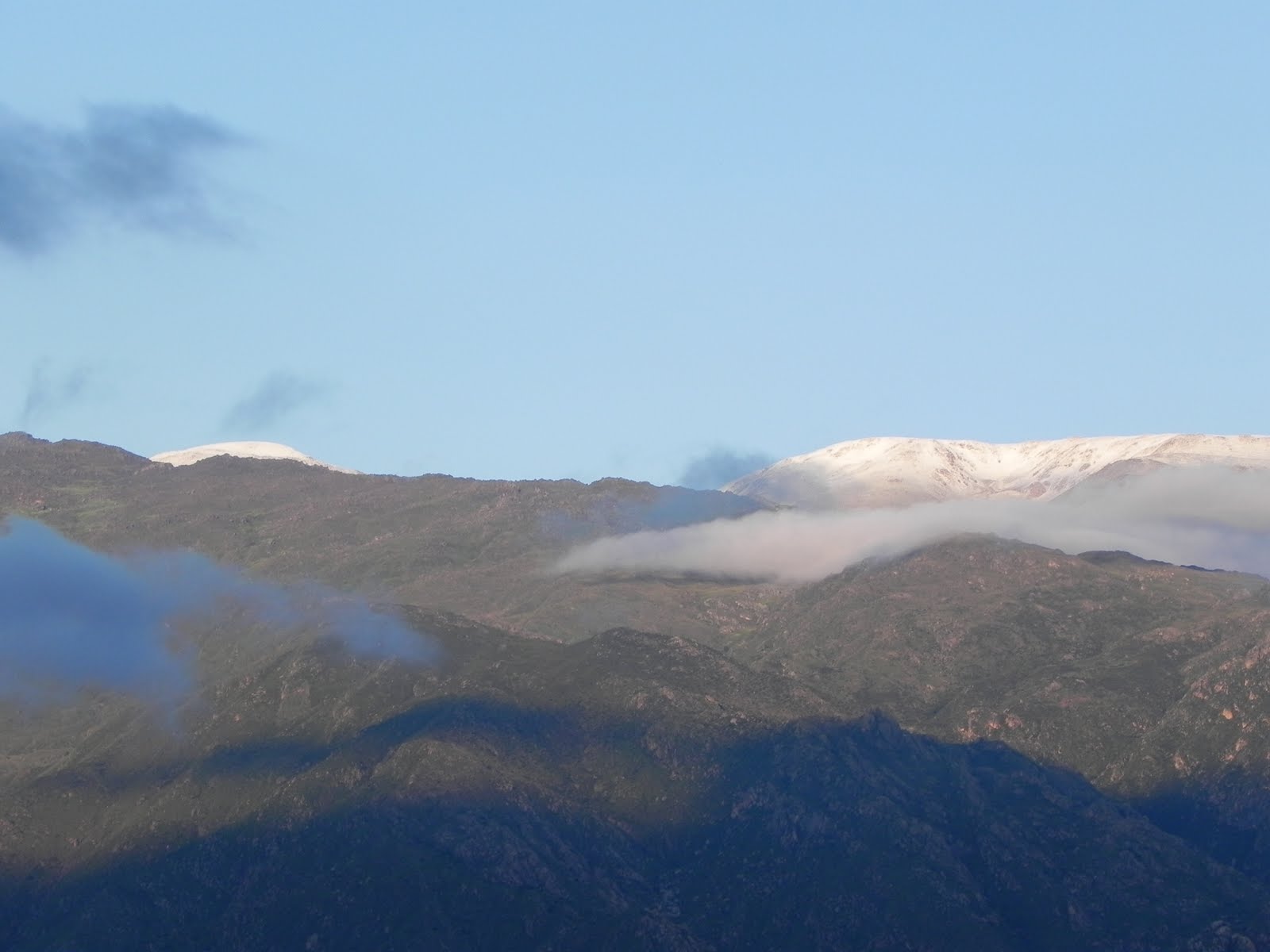
A week ago the weather was cloudy & occasionally rainy. Then it changed to sunny & warmer. In the last two days, the clouds came back. Last night it sprinkled, & we saw one lightning flash.

This morning the ground is wet, it's partly cloudy, & low clouds hover over the mountains. Mike stood outside Ginny's front door to shoot this picture of snow on the high peaks.


Temperatures are comfortable to warm. Light cotton clothing & occasionally a light sweater are all we've worn.

We stopped by to see local ceramicist Sasha Utama's work this week, but he was not home. I took these photos of his yard.


Sunday, February 13, 2011

Faces of My Land


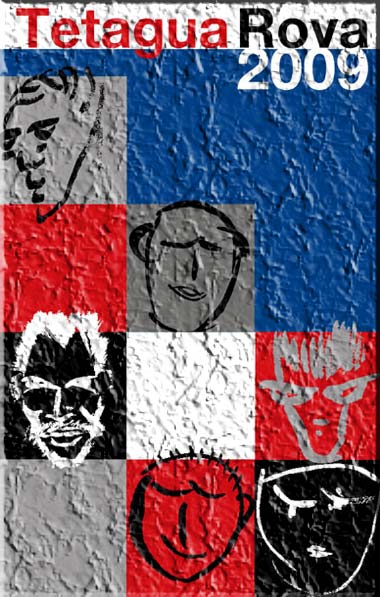
Tetagua Rova 2009 – Faces of My Land – an art exhibit from Paraguay has begun its Latin American tour at the Paraguayan embassay in Montevideo.

Featured artists are Osvaldo Camperchioli, Sergio Buzó, Noel Herzog, Carla Ascarza, Osvaldina Servían, Liliana Segovia, Fernando Alló, Sergio Jara, Marco Reynaldi, Eugenio Massana, Michael Burt, Adriana Duarte, Daniel Muzzano, Raquel Rojas, Ofelia Fisman, Lutgard Van Dyck, Martín Vallejos, Jorge Valladares, y Marta Rocío Benítez.

Saturday, January 29, 2011

Alice Neel


"I thought you had to give up a lot for art, and you did.  It required complete concentration.  It also required that whatever money you had had to be put into art materials."


American Artist


1900 - 1984


The Spanish Family (1943)


What have you had to give up in order to be able to paint, or write or play music?  Our muses can be demanding — asking us to give up relationships, friendships and even family.  And sometimes our muses will drain our spirit and leave us battered and lifeless.  Art requires the artist to be faithful and loyal.   Art demands that we work hard, often with little or no respect, money or fame.  We labor on day and night hoping that one day someone will discover us.  Sometimes we hurt those we love.  We sacrifice our family on the altar of creativity.  And for what?  The hope that maybe one day someone will notice.  It takes a lot of courage to be an artist.  To be willing to sacrifice so much.  For some of us, we sacrifice our sanity or even our lives.  


And yet, I think there is another way.  We can find balance in our lives.  We don't have to sacrifice everything.  We can maintain our sanity without falling off the cliff.  Don't let the creative impulse destroy you.  Be strong.  Find a way to balance the wild and crazy spirit with the routines of daily living.  Maybe you can knit, take up yoga, play golf or simply take a walk.  Embrace the whole you, not just the creative side.  Anything taken to the extreme is destructive.

Wednesday, January 12, 2011

Pierre Auguste Renoir


Self-Portrait, 1910


"There are some things in painting which cannot be explained, and that something is essential."


French Artist


1841 - 1919


On the Terrace, 1881


All art (painting, sculpture, literature, music, etc) has something that cannot be explained, identified or understood.  A work of art is greater than its creator.  A work of art is greater than the sum of its parts.  When you look at a painting what do you see?  What do you not see?  What is the soul of the painting?  When you read a story what do you feel?  What do you not feel?  What is the heart of the story?  When you listen to music what do you hear?  What do you not hear?  What is the spirit of the music?


When I write a poem, I don't always understand it and others may understand it even less.  The poem has a life of its own — a meaning of its own.  I will come upon it weeks, months and even years later and it has been transformed into something I do not know.  Some days I like it and some I don't, but it is beyond my control.  It laughs at me and demands that I leave it alone.  It never thanks me for bringing it into existence.  It accuses me of locking it in a closet.  It says I was a terrible parent.


Thursday, January 6, 2011

Joan Miro


The Garden 2

Joan Miro


"More important than a work of art itself is what it will sow.  Art can die, a painting can disappear.  What counts is the seed."


Spanish Painter/Sculptor


1893 - 1983


Joan Miro


Growing up in a conservative Mennonite family, I was not exposed to art as a child.  My maternal grandfather even discouraged photographs.  My first exposure to art came my freshman year in college where in one of my classes we had to choose an artist to study.  I chose Miro and his paintings planted in my soul a love of art.  Artists, musicians and writers all plant seeds with their works of art.  A great novel stays with you long after you have read it.  When you fall in love with a painting, you come back to it again and again for it to refresh your soul.  How many times do you listen to the same piece of music over and over.  And each time you hear it years later, it brings back waves of emotion.  


What seeds are you planting with your writing, your painting or your music?  How is your art impacting your audience? What seeds have you planted in their souls?  


I am curious.  Please share with me who were the first artists, writers and musicians to touch your life.


Wednesday, January 5, 2011

Christina Baldwin


"The reason I spend thousands of lifetime hours creating something 99 percent of which no one else is likely to ever read is that writing itself is the gift."


American Author/Speaker


1946 - 


Sometimes as writers we become caught up in the business of publishing and experience the hurt and pain of rejection.  We become frustrated and sometimes quit writing because we don't think we are good enough.  The need to write, to express ourselves, is not about being published.  The need to write and to create is a gift in itself.  Celebrate and honor the gift you have been given.  Write for the sake of writing.


The same can be said of painting and any of the other forms of creative expression.  Painting is not about selling your art to the highest bidder or having your painting hang in a museum somewhere.  Painting is a gift to be honored and treasured.  Respect and appreciate the gift that you have been given.