Showing posts with label Spiritual. Show all posts

Saturday, July 9, 2011

Annie Dillard


"Write as if you were dying.  At the same time, assume you write for an audience consisting solely of terminal patients.  That is, after all, the case.  What would you begin writing if you knew you would die soon?  What could you say to a dying person that would not enrage by its triviality?"


American Writer


1945 -


These are not idle statements.  Death puts a very different perspective on what we do.  What would you write if you knew you were dying?  Do you have a few final stories to tell or poems to write?  What would you paint?  Would try to create something you have never created or would you paint the same thing you have always painted?  Or would you write at all?  Would let go of your creative impulse?  


What would you write if no one would criticize you?  What would you paint if you knew that no one would laugh?  What would you sing if you knew that people would clap?  


Death is about saying goodbye to what we know.  Death is about letting go of material objects that have been a part of our lives.  Death is about forgetting.  Death is a door through which we all must walk whether we are painters, writers, doctors or lawyers.

Tuesday, June 21, 2011

Robert Bly


"When anyone seriously pursues an art — painting, poetry, sculpture, composing — over twenty or thirty years, the sustained discipline carries the artist down to the countryside of grief, and that descent, resisted so long proves invigorating. . . . As I've gotten older, I find I am able to be nourished more by sorrow and to distinguish it from depression."


American Poet


1926 - 


I first heard Robert Bly read poetry in 1969 while I was in college and I still own a copy of his very first book of poetry, Silence in the Snowy Fields, which I bought when he was in town and is autographed by him.  He was majestic, expansive and seemed to blow the roof off the auditorium.  I fell in love with the poetry I read in that small sixty-page book, published by Wesleyan University Press, full of images of the midwest where I was born and raised.  Years later I had another opportunity to hear Bly read and I bought a collection of his prose poems, Morning Glory.  I own a number of his poetry books and his books of translated poems.  I even bought the book that made him rich and famous, Iron John, a non-fiction book I have never been able to finish reading.  


Here is a short poem that I love.  The last two lines have the feel of Japanese haiku.


Watering the Horse


How strange to think of giving up all ambition!


Suddenly I see with such clear eyes


The white flake of snow


That has just fallen in the horse's mane!


Here is another favorite poem of mine from his first collection.  This poem evokes the feeling of the rural countryside in which I grew up.  Anyone who grew up in the rural midwest will immediately feel at home.


Three Kinds of Pleasure


                   I


Sometimes, riding in a car, in Wisconsin


Or Illinois, you notice those dark telephone poles


One by one lift themselves out of the fence line


And slowly leap on the gray sky —


And past them, the snowy fields.


                   II


The darkness drifts down like snow on the picked cornfields


In Wisconsin:  and on these black trees


Scattered, one by one,


Through the winter fields —


We see stiff weeds and brownish stubble,


And white snow left now only in the wheeltracks of the combine.


                  III


It is a pleasure, also, to be driving


Toward Chicago, near dark,


And see the lights in the barns.


The bare trees more dignified than ever,


Like a fierce man on his deathbed,


And the ditches along the road half full of a private snow.


Sunday, May 22, 2011

Leonard Baskin


"Art is man's distinctly human way of fighting death."


American Artist


1922 - 2000


Isaac
(1973)


Some of us have a desire to live forever and look for secrets to preserve our youth.  Others consider and even attempt suicide.  Some people run from death hoping to escape the long reach of its arms.  Others look death in the face and challenge it.  None of us will escape.


Creating works of art offer us a way to extend our lives beyond our deaths — to keep our legacy alive.  When others read our novels, listen to our songs, or view our paintings, we are given a second chance at life — a second chance to touch the lives of others with the truth as we know it.


Create as if you were dying today.  Paint from your heart.  Write from the depths of your soul. Sing with all the joy you can muster.  None of us know when our time is up — when the light of our life is extinguished so live each moment to the fullest.  Enjoy the gifts you have been given.  Love those who love you.

Wednesday, May 18, 2011

Henry Moore


"Between beauty of expression and power of expression there is a difference of function.  The first aims at pleasing the senses, the second has a spiritual vitality which for me is more moving and goes deeper than the senses."


— Henry Moore


British Sculptor


1898 - 1986


Which is more important the beauty of what is said or the power of what is said?  I agree with Moore that the impact of what is communicated is more important than the beauty with which it is communicated.  It doesn't matter whether you are talking art, literature or music.  Too much emphasis in our culture has been put on beauty.  Form often wins out over substance.  For me, the substance of the art matters more.  The spiritual aspect of the communication is more important than the surface beauty.  Some works of art have both beauty and substance.  But if I must choose, I choose substance over beauty.  When you look at a painting, listen to music or read a novel, what is more important to you:  what is said or how it is said?


Sunday, May 15, 2011

Graham Greene


"Writing is a form of therapy; sometimes I wonder how all those who do not write, compose, or paint can manage to escape the madness, melancholia, the panic and fear which is inherent in a human situation."


British Novelist


1904 - 1991


Have you ever thought of your writing or your painting as a form of therapy, as a way to help you through the challenges you face in life with at least a part of your sanity?  This goes to the heart of who do we create for?  Ourselves or others?  I think the answer for the most part is ourselves.  If we write what others want us to write or paint what others want us to paint, I think we hurt ourselves more than help ourselves.  We all have demons in our lives that we must work through.  For some it is their childhood.  For others it is the death of someone they loved dearly.  For others it is the spiritual doubts they have.  Creating works of art helps us cope with the pain that is at the heart of our lives.  It helps us face the fears that try to force us into hiding.  It helps us to keep the madness at bay for a little while.

Monday, May 9, 2011

Kurt Vonnegut


"The practice of art isn't to make a living.  It's to make your soul grow."


American Novelist


1922 - 2007


Many of us dream of making a living from our art.  We want to spend a hundred percent of our time on our art.  Actually very few artists, musicians and writers make a living from their work.  Most have to take on jobs to support their creative habit or starve.  If the reason we write or paint is to make money, then we should give it up and go find a job in business.  Making art is not about money.  Making art is about personal growth and development — about the journey of the soul.  Money, if it comes, is the gravy.


Kurt Vonnegut is one of my favorite novelists.  His Cat's Cradle is in my all time list of favorite novels.  I first read him in college and last in 2009 when I read Armagedd0n in Retrospect.


Here is a visual tribute to Kurt Vonnegut.


Thursday, April 28, 2011

Matsuo Basho


"Seek not to follow in the footsteps of men of old; seek what they sought."


Japanese Haiku Poet


1644 - 1694


Poems by Basho on Tanzaku paper

Yamagata Museum of Art


Sometimes we seek to copy the masters.  We need instead to look deeper than the surface technique and understand what they were attempting to accomplish — what was the passion in their lives.  We need to connect with their souls.  What was their moment of enlightenment?


I believe we have a spiritual connection with those artists and writers who have gone before us.  We need to explore this connection and learn from it.  We should not simply copy what we like.  We should connect with the meaning in their work.


What are you seeking to accomplish in your art?  What do you want others to perceive in your writing?  What is your understanding of the universe?  Have you achieved enlightenment?


Tuesday, April 26, 2011

Henry Wadsworth Longfellow


"Music is the universal language of mankind."


American Poet


1807 - 1882


Music is a special art form in that it touches the soul at a deeper level than most of the other arts.  Music can cross language barriers often without translation.  Music connects people in ways that the other arts don't.  When we are happy, we all have a desire to sing with a joyful voice.  When we are sad, our singing gives voice to our melancholy.


In college when I was blue, I would walk along the railroad tracks and sing to myself.  I cannot carry a tune, but when alone I will sing to myself.  Music moves me at a deep level.  


During the last 24 years, I have seen the impact of music on my training classes.  I have the participants of my classes sing and dance as part of the class.  I am amazed at the power of music to break down barriers and cause people to open up and share their thoughts and feelings.


Many writers and artists listen to music when they are creating.  What kind of music do you listen to when you are creating?  What music gets your creative juices flowing?


Here is a video of Carrie Underwood inspiring an audience of country and western singers with her rendition of How Great Thou Art.


Thursday, February 24, 2011

Martin Luther


"Music is the art of the prophets, the only art that can calm the agitations of the soul; it is one of the most magnificent and delightful presents God has given us."


German Priest, Theologian, Bible Translator, Hymn Composer


1483 - 1546


For those who have not heard of Martin Luther, he was a Catholic priest who inspired the Prostestant Reformation in 1517 by nailing his 95 theses on the door of the church in Wittenberg, Germany.  He helped change the course of Christianity.  I heard about Martin Luther early in my life, but I never knew that he translated the Bible from Latin to German or that he composed hymns.  He had a creative nature.


And I believe as does Martin Luther that music heals the soul and takes us to a whole other world.  Do you listen to music when your write or paint?  What kind of music inspires your creativity?  And if you compose music, are you ever inspired by a painting or a novel?  I believe the arts are intertwined and interconnected and touch our souls at a deep level.


Saturday, February 19, 2011

Francis Bacon


Self-Portrait
(1971)


"The job of the artist is always to deepen the mystery."


English Artist


1909 - 1992


The Study After
Velazquez's Portrait
of Pope Innocent X
(1953)

Life is mysterious and full of questions with few answers.  The job of the creative leader is not to provide the answers but to help his audience to explore the questions at even deeper levels. Life at its core is spiritual in nature.  The artist connects the spiritual with the mysterious and fills the heart with joy.  Our challenge has writers, artists and creative leaders is to reach deep within our spirits and share the magical mystery of the heart.  


What spiritual questions are you exploring in your art?  Your writing?  Your acting?  Your dancing?  What is the mysterious hidden within your creation?  What is the song sung from your heart?


Wednesday, February 16, 2011

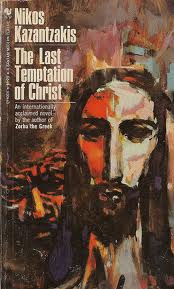
Nikos Kazantzakis


"I fear nothing, I hope for nothing, I am free."


Greek Novelist


1883 - 1957


Years ago I read the fascinating novel, The Last Temptation of Christ, by Nikos Kazantzakis.   The novel is an attempt to put a human face on Jesus Christ and take him out of the spiritual world where he is God.  The book has since been made into a movie.  I don't recall if this quote is from the book, but it could be given the storyline.


What kind of person would make this kind of statement?  Who among us is not afraid of something?   Who hopes for nothing?  And does freedom really mean having no fear and no hope?  Should the creative leader fear nothing?  Should the artist hope for nothing?  Can a novelist ever be free?  And what is freedom, anyway?  Every society places constraints on its citizens.  Society by its very nature has rules and regulations to govern interaction between people.  Artists often attempt to step outside the boundaries laid down by society.  Some are successful and others are destroyed in the process.


Is Nikos saying that if we have hopes and fears that we are not free?  How can a creative leader function if he does not have hope?  Wouldn't he stop living?  While many of us wish that we did not have fears, there is a positive aspect of fear.  It can protect us from real danger.  Would you want to live without fear?

Monday, February 7, 2011

Sara Teasdale


"It is my heart that makes my songs . . . ."


American Poet


1884 - 1933


Our most original creative work comes from the heart.  The heart produces work that is more authentic than work produced by the analytical brain.  Analytical stories and poems fail to connect with the hearts of the readers and leave them wanting more.  Creative work that does not come from the heart can be cold and uncaring.  You will do your best work if it comes from the heart.  


Debt


by Sara Teasdale


What do I owe to you


     Who loved me deep and long?


You never gave my spirit wings


     Nor gave my heart a song.


But, oh, to him I loved,


     Who loved me not at all,


I owe the little open gate


     That led through heaven's wall.


(Originally published in Poetry, March 1914.)

Sunday, January 23, 2011

Jack London


"You can't wait for inspiration.  You have to go after it with a club."


American Novelist


1876 - 1916


If you wait for inspiration, you may never find it.  Inspiration sneaks upon you when you are working and catches you by surprise.  Inspiration invades your dreams and you wake up with the answer to your problems.  When you pretend that inspiration is not important, it dominates your soul.  


Consider inspiration as a friend who comes and goes at all hours of the day and night bearing gifts that will delight you.  When you open the gifts offered by inspiration, be not frightened by what you find.  Cherish the madness that inspiration bestows upon you.  Taste the sadness when it leaves you naked and exposed to the elements.  


Kneel before the altar of inspiration and pray that you will survive the dangerous journey.  Catch fireflies and offer then as a sacrifice to the gods of inspiration.  Dance with the goddess of inspiration and steal her beauty.  Offer a prayer of thanksgiving for an opportunity to taste of the joy of the gods.

Saturday, January 22, 2011

Toni Morrison


"If writing is thinking and discovery and selection and order and meaning, it is also awe and reverence and mystery and magic."


American Novelist


1931 -


This quote from Toni Morrison captures the essence of the creative arts.  Yes, the creative arts are about finding meaning in the world around us, but the arts are also about the magic of that world.  Yes, the creative arts are about creating order in a chaotic world, but the arts are also about accepting the mystery of that world.  Yes, the creative arts are about discovering new visions of the world, but the arts are also about kneeling in reverence before the altar.  Yes, the creative arts are about thinking deeply about how the world should be, but the arts are also about the awe that we feel when the work of creation is finished.  


Are you in awe of what you created and how you created it?  Do you appreciate the mystery and magic of the experience?  Learn to honor and respect the creative gifts that you have been given.  

Monday, January 17, 2011

Ivan Albright


Self-Portrait
Ivan Albright
(1981)


"A painting is life and a painting is death . . . the picture is our own legacy left by tomorrow's dead for tomorrow's living."


American Artist


1897 - 1983


The Picture of Dorian Gray
Ivan Albright
(1943)


What will your legacy be?  What is your reason for being?  Why are you here?  We will all reach the end of the road one day.  What will you be remembered for?  As creative leaders we have an opportunity to leave the legacy of our work — our paintings, our poems, our songs and our stories.  And for some of us, we may be remembered for years and even centuries, but most of us will be forgotten except by those who loved us.  And for me, the most important legacy is the lives we have touched, the people we have met and the people we have loved.  Don't get me wrong.  Our creative work is very important, but the people in our lives are even more important.  Unfortunately, some of us sacrifice one for the other.  We need to learn balance.  To give to each what is needed.  What will your legacy be?

Friday, January 7, 2011

John Cheever


"Art is the triumph over chaos."


American Novelist / Short Story Writer


1912 - 1982


Human beings are constantly looking for the meaning of life.  Why are we here?  What is our purpose for being born?  The world can appear to be very chaotic and without meaning so most of us have a philosophical or religious lens through which we view the chaos and give it meaning.  Writers, storytellers and artists use their art to find the meaning of life.  The stories we tell about ourselves help us to give shape and purpose to our lives.  The stories we express in our art help to shape our view of the world.  The stories we share are the lens through which we see the world.  Art is a way of taking control of the chaos and for a short time believing we have won.

Thursday, December 30, 2010

Martin Luther King Jr.


"If a man is called to be a street sweeper, he should sweep streets even as Michelangelo painted, or Beethoven composed music or Shakespeare wrote poetry.  He should sweep streets so well that all the hosts of heaven and earth will pause to say, 'Here lived a great street sweeper who did his job well.'"


American Civil Rights Leader/Preacher/Author


1929 - 1968


Dr. Martin Luther King Jr.


One of those games we play is:  "Where were you when . . ."  On April 4, 1968, I was a nineteen year old college student at Goshen College in Indiana.  Two months earlier I had the privilege of marching with Dr. King at a Vietnam War protest march in Washington D.C. The murder of Dr. King on my birthday in 1968 impacted me both emotionally and spiritually.


Dr. Martin Luther King Jr.


For the past twenty years I have been sharing this quote by Dr. King in my speeches on leadership.  I believe that work is spiritual in nature.  The work we do helps to cleanse our souls and free our spirits.  Many people see work as a negative condition.  They hate Mondays and grumble about having to go to work.  Many people wish they did not have to work.  But if you have ever lost a job and sat idle for a few months, you appreciate the value of work in your life.


As creative leaders we have a special opportunity to share the fruit of our labor with others. Most of my life I have dreamed of being able to give up my bill-paying job and write full time.  Fortunately, this never happened.  I think I am a better person for having the discipline to get up an hour earlier than everyone and writing before going to work.  Sometimes what we wish for is not in our best interests.  The bill-paying work and the creative work are both important and both have helped to make me a better person.


Be proud of the work you do.  Celebrate the work you do.  Be happy with the gifts you have been given.

Friday, December 24, 2010

Theodore H. White


"To go against the dominant thinking of your friends, of most of the people you see every day, is perhaps the most difficult act of heroism you can have."


American Journalist/Writer


1915 - 1986


As artists and creative leaders, we often have to stand alone against the thinking of family and friends.  This is very difficult to do and often we will be criticized for what we think and the way we behave.  This happened to me early in my life.  I grew up in the Mennonite church in central Illinois.  When I was a sophomore in high school, I committed myself to being a minister.  By the time I was a senior, I was no longer a believer in the faith of my forefathers.  This admission was very difficult for both my mother and father to hear.  


Do you stand up for what you believe even though the people around you disagree with you?  Did you become an artist despite the wishes of your parents?  Many parents prefer their children become doctors and lawyers.  It takes a strong-willed individual to become a writer or a painter in the face of parental opposition.  As Theodore White says, each of you are heroes.  Celebrate and appreciate your strength and individuality.